
Products
Regular visual inspections can catch issues early. Key areas to check: 1) Sealing jaws for residue buildup or damage, 2) Film rollers for wear or misalignment, 3) Product chutes for blockages, and 4) Sensor lenses for dirt or condensation. Use a flashlight to inspect hard-to-reach areas and a magnifying glass for small defects.
Modern VFFS machines have built-in diagnostic tools. These include: 1) Error code displays (e.g., E101 for film break, E202 for seal failure), 2) Data loggers that record machine performance, and 3) Remote monitoring systems that send alerts to maintenance teams. Familiarize yourself with your machine’s error code manual to quickly identify issues.
Heat seal issues are common in VFFS machines. To fix them: 1) Adjust the sealing temperature (too low = weak seals, too high = burnt film), 2) Check the pressure of the sealing jaws (uneven pressure causes inconsistent seals), and 3) Replace worn sealing elements (Teflon coatings or heating wires).
Ultrasonic seals use high-frequency vibrations to create bonds. Common issues include: 1) Weak seals (caused by low amplitude or pressure), 2) Damaged film (caused by excessive amplitude), and 3) Seal contamination (product residue on the sonotrode). Clean the sonotrode regularly and calibrate the amplitude settings.
Volumetric dosing systems (cups or augers) can have accuracy problems. Solutions include: 1) Calibrate the dosing cup size for your product density, 2) Adjust the auger speed for consistent flow, and 3) Use vibration to settle product in the dosing cup. For sticky products, add a release agent to the cup.
Gravimetric (weighing) systems are more accurate but require careful calibration. To fix errors: 1) Check the load cell for damage or drift, 2) Ensure the product flow is consistent (use a vibratory feeder), and 3) Calibrate the system with standard weights. Avoid overloading the load cell, as this can cause permanent damage.
Film breakage is often caused by: 1) Excessive tension (reduce the unwinder tension), 2) Sharp edges on machine components (smooth with sandpaper), and 3) Poor film quality (use higher-grade film). For thin films, use a film support system to prevent sagging.
Film misalignment causes bags to be uneven or misprinted. Fixes include: 1) Adjust the film guide rollers for proper alignment, 2) Use a photoeye sensor to track printed film, and 3) Ensure the forming shoulder is clean and free of product buildup. For printed film, use a register control system to maintain alignment.
Gears and bearings are critical for machine operation. To prevent failures: 1) Lubricate gears with the recommended oil (check the manual), 2) Replace worn bearings before they fail (listen for unusual noises), and 3) Keep gears clean of product residue. Use a gear tooth brush to remove buildup.
Motors and drives power the VFFS machine. Maintenance tips: 1) Check motor temperature (overheating indicates a problem), 2) Inspect drive belts for wear or tension issues, and 3) Keep electrical connections tight and clean. For servo motors, calibrate the encoder regularly.
A food processing plant had frequent seal failures on their VFFS machine. The maintenance team discovered that the sealing jaws were worn and the temperature controller was inaccurate. They replaced the jaws, calibrated the controller, and implemented a daily cleaning schedule. Seal failures dropped from 10% to 0.5% of production.
A pharmaceutical company was having issues with underfilled vials on their VFFS machine. The problem was traced to a faulty load cell and inconsistent product flow. They replaced the load cell, added a vibratory feeder, and calibrated the system. Dosing accuracy improved from 95% to 99.9% compliance with FDA standards.
Daily tasks to keep your VFFS machine running smoothly: 1) Clean sealing jaws and product chutes, 2) Inspect film rollers and guides, 3) Check error logs for issues, and 4) Verify safety interlocks. Assign these tasks to the machine operator.
Weekly tasks: 1) Lubricate moving parts, 2) Calibrate sensors and dosing systems, and 3) Inspect electrical connections. Monthly tasks: 1) Replace worn parts (seals, belts), 2) Test emergency stops, and 3) Perform a full machine inspection. Schedule these during planned downtime.
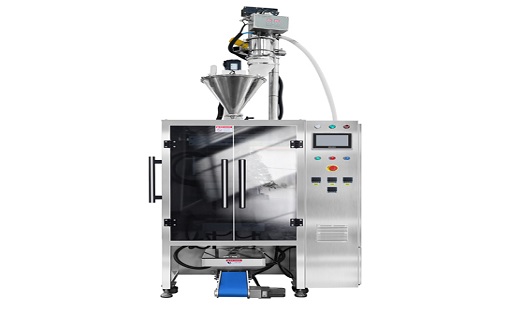
Troubleshooting VFFS machine issues requires a systematic approach that combines visual inspection, diagnostic tools, and preventive maintenance. By understanding common problems and their solutions, you can minimize downtime, improve product quality, and extend the life of your machine. Remember to follow the manufacturer’s guidelines and train your team on proper maintenance procedures. With the right care, your VFFS machine will be a reliable asset for your packaging line.
Relevant Recommendation
PRODUCTS
Guangdong Coretamp Packaging Machinery Co., Ltd.
CONTACT