
Products
High-speed VFFS machines are defined by their production rate—typically 100+ bags per minute (bpm) for standard applications and 200+ bpm for ultra-high-speed lines. Key technologies enabling this include: 1) Servo-driven motion control for precise synchronization, 2) Multi-lane design for parallel packaging, and 3) Advanced film handling systems to minimize downtime.
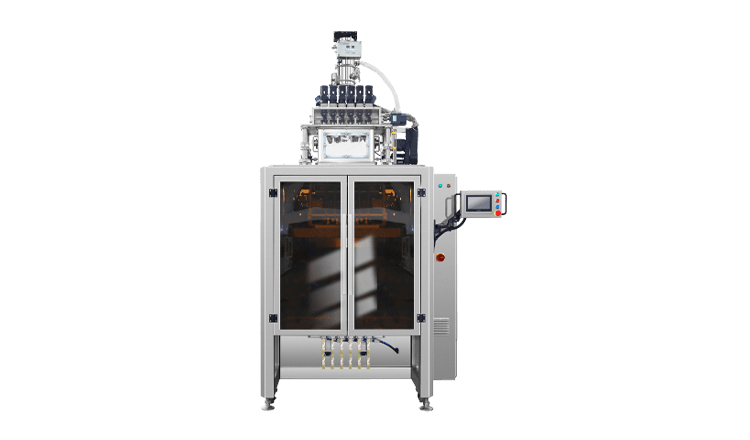
Critical components for high-speed operation include: 1) Dual servo motors for independent control of sealing and dosing, 2) High-frequency ultrasonic sealing systems (up to 40 kHz) for fast, consistent seals, and 3) Vision-guided film registration to maintain accuracy at high speeds. These components work together to ensure 99.9% uptime for 24/7 production.
Changeover time is a major bottleneck in high-speed lines. To reduce it: 1) Use tool-less changeover systems (e.g., quick-release sealing jaws), 2) Implement recipe storage for 1-click product switching, and 3) Train operators on parallel changeover techniques (preparing next product while current runs). Top manufacturers achieve changeover in <5 minutes.
High speed increases scrap risk—common issues include misaligned seals and underfilled bags. Solutions: 1) Install in-line checkweighers with auto-reject, 2) Use machine vision to inspect seals in real-time, and 3) Implement statistical process control (SPC) to monitor and correct deviations. Leading lines maintain scrap rates <0.5%.
High-speed VFFS machines require synchronized upstream equipment: 1) Bulk bag unloaders with automated feeding, 2) Vibratory bowl feeders for small components, and 3) Metal detectors with fast response times. Integration via OPC UA protocol ensures real-time data exchange between machines.
Downstream integration is critical for continuous flow: 1) Case packers with robotic pick-and-place for high-speed bag handling, 2) Palletizers with layer-forming technology, and 3) Warehouse management systems (WMS) for automated shipping. Some lines use autonomous mobile robots (AMRs) to transport finished goods.
A global snack company upgraded to a 200 bpm VFFS line, increasing output by 60% while reducing labor costs by 40%. The line uses multi-lane technology to package 4 bags per cycle and features AI-powered quality control to maintain 99.9% seal integrity.
A generic drug manufacturer implemented a high-speed VFFS line for tablet packaging. The line’s quick-changeover system reduced lead time from 24 to 12 hours, allowing them to respond faster to market demand. The line also meets FDA serialization requirements for traceability.
High-speed machines require proactive maintenance: 1) Use vibration sensors to detect bearing wear, 2) Implement thermal imaging for electrical component monitoring, and 3) Use oil analysis to predict gear failure. Predictive maintenance reduces unplanned downtime by 30-50%.
Critical spare parts for high-speed lines include: 1) Sealing jaws (keep 2 sets on hand), 2) Servo motor drives, and 3) Film registration sensors. Top manufacturers offer 24/7 spare parts delivery and on-site support to minimize downtime.
When selecting a high-speed VFFS supplier, look for: 1) ISO 9001 certification, 2) In-house R&D for speed optimization, 3) Global service network, and 4) References from similar high-speed applications. Reputable suppliers offer total cost of ownership (TCO) analysis.
While high-speed machines have a higher initial cost ($150k-$500k), they offer significant ROI: 1) Labor savings (1 machine replaces 5-10 workers), 2) Higher output per square foot of floor space, and 3) Reduced packaging material waste. Most lines pay for themselves in 18-24 months.
Future high-speed lines will feature: 1) Digital twins for virtual commissioning, 2) AI-powered process optimization (real-time speed adjustments), and 3) Cloud-based performance monitoring. These technologies will enable lights-out manufacturing for 24/7 operation.
Sustainability is a growing trend: 1) High-speed machines with energy recovery systems (regenerative braking), 2) Compostable film compatibility at high speeds, and 3) Lightweighting technology to reduce material usage. Some lines achieve 30% energy savings vs. traditional models.
High-speed VFFS machines are the backbone of modern mass production, enabling unprecedented efficiency and scalability. By understanding the technology, optimizing operations, and choosing the right supplier, businesses can unlock significant cost savings and competitive advantages. As Industry 4.0 and sustainability trends evolve, high-speed VFFS machines will continue to be at the forefront of packaging innovation.
Relevant Recommendation
PRODUCTS
Guangdong Coretamp Packaging Machinery Co., Ltd.
CONTACT