
Products
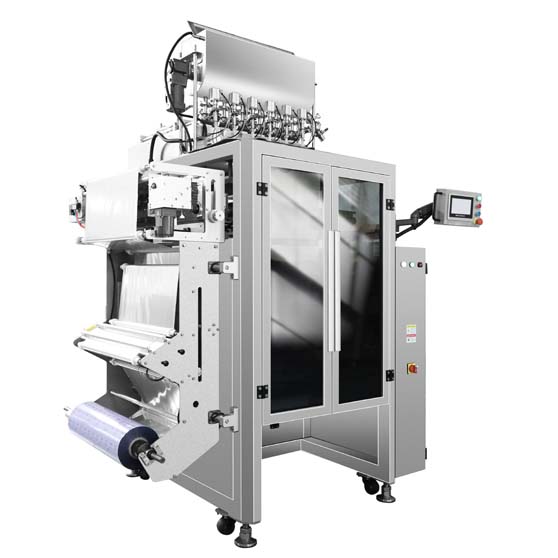
A VFFS machine consists of several key mechanical components: the film unwinder, forming shoulder, sealing jaws, and product hopper. The film unwinder controls the tension of the packaging material, while the forming shoulder shapes the film into a vertical tube. Sealing jaws (either heat or ultrasonic) create airtight seals, and the product hopper uses volumetric or gravimetric dosing systems to fill bags accurately.
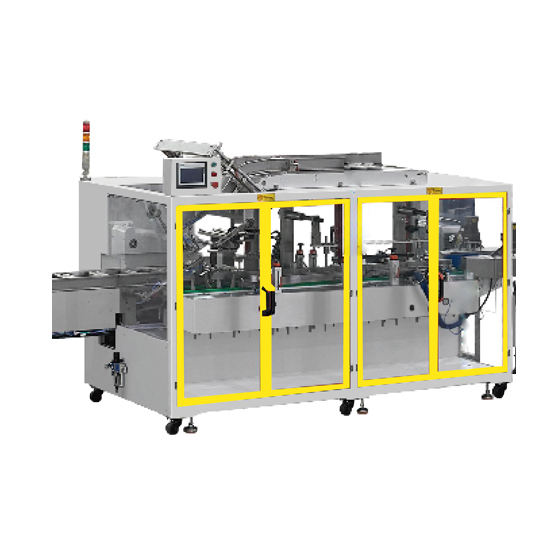
Modern VFFS machines use PLC (Programmable Logic Controller) systems to manage operations. These systems integrate with HMI (Human-Machine Interface) panels for operator control, allowing adjustments to bag length, sealing time, and product dosage. Advanced models include touchscreen interfaces with recipe storage for quick product changeovers.
Increasing VFFS machine speed can boost production output, but it may compromise accuracy. To balance both, operators should: 1) Use servo-driven dosing systems for precise product placement at high speeds, 2) Implement dynamic film tension control to prevent bag misalignment, and 3) Calibrate sensors regularly to maintain fill accuracy.
Unplanned downtime is a major cost driver for packaging lines. To minimize this, establish a preventive maintenance schedule that includes: 1) Daily inspection of sealing elements for wear, 2) Weekly lubrication of moving parts, and 3) Monthly calibration of weighing systems. Predictive maintenance tools (like vibration sensors) can also detect potential failures before they occur.
VFFS machines often work with upstream and downstream equipment. Upstream, bulk bag unloaders and vibratory feeders supply product to the VFFS hopper. Downstream, checkweighers verify fill accuracy, and case packers prepare finished bags for shipping. Proper integration ensures smooth material flow and reduces bottlenecks.
In-line quality control systems are critical for VFFS packaging lines. These include: 1) Metal detectors to remove contaminated products, 2) Vision systems to inspect seal integrity and print quality, and 3) X-ray machines for non-destructive testing of packaged goods. Integrating these systems with the VFFS machine allows real-time rejection of defective products.
Packaging material is a significant expense for many businesses. To reduce waste: 1) Use film edge trimmers to minimize excess material, 2) Implement automatic film splicing to avoid film breaks, and 3) Choose the right film thickness for your product (thicker films may be unnecessary for lightweight items).
VFFS machines consume energy for heating, motor operation, and control systems. Energy-saving measures include: 1) Using energy-efficient motors (IE3 or higher), 2) Installing heat recovery systems for sealing jaws, and 3) Programming machines to enter standby mode during breaks. These measures can reduce energy costs by 20-30%.
In the food industry, VFFS machines package a wide range of products, from snacks and cereals to frozen foods and beverages. Key considerations include: 1) Hygienic design (stainless steel construction, easy cleaning), 2) Compliance with food safety standards (like HACCP), and 3) Compatibility with barrier films to extend shelf life.
Pharmaceutical applications require VFFS machines that meet strict regulatory standards (like cGMP). These machines feature: 1) Aseptic processing capabilities, 2) Serialization for traceability, and 3) Cleanroom-compatible designs. They are used to package tablets, capsules, and medical devices like syringes and bandages.
Digital twins are virtual replicas of physical VFFS machines. They allow operators to simulate production scenarios, test new recipes, and optimize performance without disrupting actual operations. Digital twins can also predict maintenance needs by analyzing real-time machine data.
Augmented reality (AR) tools are transforming VFFS machine training and maintenance. AR headsets overlay digital instructions onto physical machines, guiding operators through setup procedures and troubleshooting steps. This reduces training time and helps maintenance teams resolve issues faster.
A snack food company optimized their VFFS machine by: 1) Switching to a thinner packaging film (reducing material costs by 15%), 2) Implementing servo-driven dosing (cutting product giveaway by 10%), and 3) Using energy-efficient motors (lowering electricity costs by 5%). These changes resulted in annual savings of $150,000.
A cosmetics manufacturer integrated their VFFS machine with a checkweigher and case packer. The new setup reduced manual handling, cut changeover time from 30 to 5 minutes, and increased overall line efficiency by 40%. The company also used AR training to reduce operator onboarding time by 50%.
Before purchasing a VFFS machine, evaluate your production needs by considering: 1) Daily output volume (bags per minute), 2) Product type (powder, liquid, granular), and 3) Packaging format (pouches, sachets, bags). This will help you select a machine with the right speed, dosing system, and sealing technology.
The total cost of ownership (TCO) of a VFFS machine includes more than the purchase price. It also covers: 1) Maintenance and repair costs, 2) Energy consumption, 3) Training expenses, and 4) Downtime costs. A lower-priced machine may have a higher TCO if it requires frequent repairs or consumes more energy.
VFFS machines are essential for modern packaging lines, but their performance depends on proper operation, maintenance, and integration. By understanding the fundamentals of VFFS technology and implementing optimization strategies, businesses can maximize efficiency, reduce costs, and stay competitive in the global market. Whether you’re a small business or a large corporation, investing in VFFS machine optimization is a smart way to improve your bottom line.
Relevant Recommendation
PRODUCTS
Guangdong Coretamp Packaging Machinery Co., Ltd.
CONTACT