
Products
Maintaining product freshness requires a packaging solution that balances speed with structural integrity. The side fin stick pack packaging machine has emerged as a critical asset for manufacturers handling powders, liquids, and granules. These systems create a slim, portable format that consumers find convenient for on-the-go applications.
Reliability in these machines starts with the sealing mechanism itself. A side fin seal provides a distinct aesthetic and functional advantage over traditional back seals. It allows for a flatter profile, which improves packing density in secondary containers. This efficiency reduces shipping costs and minimizes the carbon footprint of the distribution chain.
For us, the priority remains the precision of every individual stick. Every lane in a multi-lane system must operate with identical pressure and temperature settings. Discrepancies between lanes often lead to micro-leaks or aesthetic variations that damage brand reputation. Precision engineering ensures that each side fin is uniform across the entire web.
The seal is the most vulnerable point of any flexible package. Side fin seals require precise jaw alignment to prevent channel leeks near the corners. High-quality film pulling systems must maintain consistent speed to avoid stretching the material. Stretching often thins the sealant layer, compromising the protective barrier of the package.
Advanced sensors now monitor seal quality in real-time. If a deviation in heat or pressure occurs, the system can flag the specific lane for inspection. This level of granularity prevents large batches of defective products from reaching the market. It shifts the paradigm from reactive quality control to proactive process management.
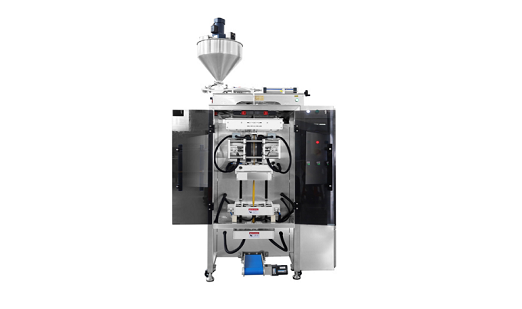
Multi-lane stick pack machines face unique challenges regarding film tension. The master roll of film is slit into multiple ribbons before forming. Each ribbon must travel the same distance under the same tension. If one lane becomes tighter than the others, the side fin will wrinkle or curl.
Mechanical compensators and electronic tension controllers work in tandem to solve this. They adjust for variations in roll diameter as the film is consumed. This constant adjustment keeps the “side fin stick pack packaging machine” operating at peak efficiency. It reduces downtime caused by film breakage or misalignment.
Temperature control is the heart of the vertical form fill seal process. Traditional heaters often suffer from thermal lag, where the temperature fluctuates during high-speed runs. Modern machines use PID controllers to maintain a flat thermal profile. This ensures that the first stick of the day is as secure as the last.
Continuous motion technology further enhances this stability. By moving the sealing jaws with the film, the dwell time is maximized without slowing down production. This approach allows for lower sealing temperatures, which protects heat-sensitive products like probiotics or certain pharmaceuticals.
| Technical Parameter | Specification Range |
|---|---|
| Lane Quantity | 2 – 12 Lanes |
| Packaging Speed | 30 – 60 cycles/min/lane |
| Film Width Max | 400mm – 1000mm |
| Filling Accuracy | ± 0.5% – 1% |
| Control System | PLC with Touch Screen |
| Air Pressure | 0.6 – 0.8 MPa |
Not all products behave the same way during the filling process. Fine powders tend to create dust that can contaminate the seal area. Liquids might splash, causing the side fin to fail during the heating cycle. Specialized dosing systems, such as auger fillers or piston pumps, must be integrated seamlessly.
Dust extraction units are often placed near the forming tubes. They capture airborne particles before they settle on the sealing surfaces. For liquids, anti-drip nozzles prevent product trailing. These small technical adjustments are what differentiate a standard machine from a high-precision system.
Wear and tear on sealing jaws is inevitable in high-volume environments. Carbon buildup on the heating elements can create “cold spots” that result in weak seals. Regular cleaning schedules and the use of non-stick coatings extend the life of these components.
Digital integration helps track these maintenance needs. Connection to SCADA or MES systems allows managers to monitor performance from a central office. This connectivity is essential for modern factories aiming for Industry 4.0 standards.
How does film thickness affect the side fin seal?
Thicker films require more heat and longer dwell times. However, they provide a better moisture barrier for sensitive products. The machine must be versatile enough to handle varying micron levels.
Can these machines handle biodegradable materials?
Yes, but biodegradable films often have a narrower sealing window. Precise temperature control is even more critical for these sustainable materials to avoid burning the film.
What is the typical ROI for a multi-lane stick pack system?
Return on investment usually occurs within 12 to 18 months. This is driven by labor savings, reduced material waste, and significantly higher throughput compared to single-lane alternatives.
The maintenance advice provided in this article is based on general mechanical knowledge and is for reference only. For specific technical issues, please consult the machine’s manual or a certified engineer first.
Choosing the right “side fin stick pack packaging machine” requires a deep understanding of your product’s physical properties. From powder density to liquid viscosity, every detail influences the final seal quality. A well-configured system ensures that your packaging remains a competitive advantage in a demanding global market.
Relevant Recommendation
PRODUCTS
Guangdong Coretamp Packaging Machinery Co., Ltd.
CONTACT